Art doesn’t always shout to be heard.
Sometimes it whispers — softly enough to slow your thoughts, steady your breathing, and draw you back into the present moment.
That’s the essence of Emotional Impact Art: creations that don’t just decorate a wall, but resonate inside you.
In this category, Print on the Hand explores art as a bridge between perception and emotion — where color, form, and intention become tools for healing, mindfulness, and self-awareness.
It’s about feeling the art before you analyze it. It’s about learning to see with your heart again.
The Heart of Emotional Impact Art
This category is the emotional center of Print on the Hand — where art stops being merely aesthetic and becomes transformative.
It’s the place where we explore how visuals affect emotions, mood, and even physical well-being.
Modern science agrees: visual harmony can reduce stress and regulate heart rate. Soft palettes and balanced compositions can lower anxiety.
But long before psychology confirmed it, artists intuitively knew that beauty could heal.
When you look at art that moves you — not because it’s famous or expensive, but because something about it feels true — you’re witnessing emotional intelligence in color and form.
That’s the magic of emotional impact art: it reaches you without words.
Art as a Path to Mindfulness
Mindfulness means being here — right now — with full attention.
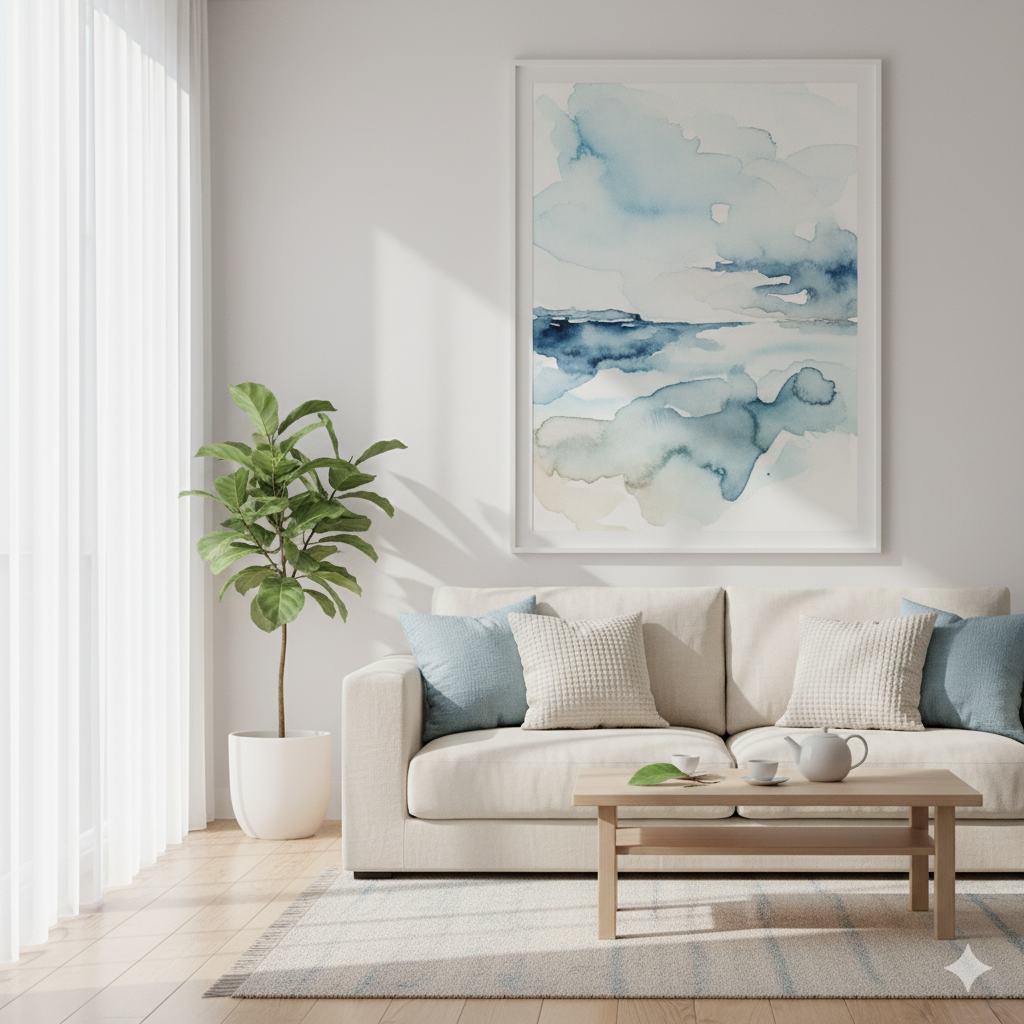
Art can lead you there effortlessly. A landscape painting, a minimalist mandala, or a soft abstract swirl of blues and whites — each can anchor your awareness.
When you hang a piece that embodies stillness, it’s not just decor. It becomes a daily meditation.
Instead of staring at your phone while you sip your morning tea, imagine sitting quietly in front of a painting that feels like a deep breath.
That’s mindfulness through art: it trains your perception to slow down.
Healing Through Art
Not all healing begins with medicine.
Sometimes, it starts with beauty.
Therapeutic art helps release emotions that words can’t reach. It provides comfort, focus, and even transformation.
Artists often say their work “heals them first” — and that same energy flows outward to the viewer.
In hospitals and therapy centers around the world, color-based art therapy is used to ease trauma and promote calm.
Gentle tones of blue and green help patients relax. Mandalas and nature-inspired imagery are used to support recovery and emotional balance.
When you bring such art into your home, you’re inviting that same quiet energy into your space — art that heals without needing to explain why.
Art as Daily Meditation
Meditation isn’t always done sitting cross-legged. Sometimes, it’s done standing before a painting.
Every morning, choose one artwork in your room. Stand still and let your gaze rest on it.
Notice the colors. Notice the breath.
That small ritual can train your mind to find calm anywhere.
Art teaches the same virtues as mindfulness: patience, observation, surrender.
When you’re present with it, your nervous system responds. It’s not imagination — it’s the visual equivalent of a mantra.
The Language of Color and Emotion
Color is the oldest emotional language in existence.
Long before words, humans painted caves in red ochre to express life and energy. They used blues for spirit and green for growth.
Each shade carries its own vibration:
- Blue – calms the nervous system, reduces tension, inspires trust.
- Green – brings balance, harmony, and renewal.
- Yellow – lifts mood, inspires creativity.
- Red – awakens vitality and courage.
- White – clarifies the mind and expands space.
Artists often say, “Color speaks when words fail.”
Mindful decoration uses that silent vocabulary deliberately — not to impress visitors, but to nurture emotional clarity in your home.
✨ Storytelling in Stillness
Art is not always narrative, but it’s always emotional.
A simple abstract can tell the story of surrender; a minimalist line drawing can capture the essence of peace.
That’s the subtle genius of visual storytelling — it lets you feel what can’t be said.
A painting of ripples might speak of impermanence.
A sculpture of open hands might evoke compassion.
An empty chair in a photograph might recall loss, or acceptance.
Every emotion is a story — and every story finds its echo in art.
Healing and the Creative Process
Creating art is also a form of mindfulness.
When you draw, paint, or design with awareness, your mind enters a meditative state. Psychologists call this flow — when time disappears and you’re fully immersed in the act of creating.
Many people who’ve never meditated find inner peace through painting, photography, or even arranging objects in a balanced composition.
This is the everyday meditation of creativity: simple acts that reconnect you with presence.
The more we allow creativity into our lives, the more resilient and balanced our emotions become.
The Science Behind Stillness
Neuroscience has confirmed what artists intuited for centuries:
looking at calming art activates the parasympathetic nervous system — the “rest and digest” response.
Brain scans show that exposure to harmonious colors increases dopamine (the pleasure chemical) and decreases cortisol (the stress hormone).
In other words: art literally changes your biology.
So, when you fill your environment with images of balance, symmetry, or gentle light, you’re not just decorating — you’re retraining your nervous system to feel safe and peaceful.
That’s why emotional impact art matters: it’s medicine for the modern mind.
Why Emotional Impact Art Matters
Because the world doesn’t need more speed.
It needs more stillness.
Emotional Impact Art reminds us that beauty has a purpose — to heal, to connect, and to remind us that peace is possible even amid chaos.
It’s a call to slow down, to return to the heart.
Whether you find that stillness in a painting, a sculpture, or a digital print, it all leads back to the same place — within.
???? Conclusion: The Art That Feels Before It Decorates
When you stand before a painting and your breath slows down, when your mind stops chasing thoughts — that’s art doing its deepest work.
It’s the meeting point between creator and observer, soul to soul.
That’s what this category is all about.
To help you remember that art can be presence, not performance.
That stillness is already inside you — art simply helps you notice it again.
If you’d love to dive deeper into how art connects with emotion, meaning, and personal transformation, continue your journey here:
Emotional Impact Art
If you’d like to explore themes that enrich artistic expression and help you better understand color, symbolism, and creative identity, take the next step here:
Styles, Themes & Trends
Interested in discovering everything Print on the Hand offers across all categories and creative paths? Explore the full list here:
All Categories
The art that feels before it decorates.
That’s the essence of Print on the Hand.
