Food is more than nourishment. In many cultures, it has always been a symbol of beauty, generosity, and celebration. But when chefs and artists transform simple ingredients into breathtaking sculptures, food becomes something else entirely: a living canvas, fragile and fleeting, yet unforgettable. This is the world of food art and edible sculptures—a place where cuisine and creativity meet, where the senses merge, and where imagination takes shape in the most unexpected materials.
The Origins of Edible Art
The roots of food art go back centuries. In ancient Japan, the practice of mukimono—delicately carving fruits and vegetables—was a way of honoring guests with offerings that were both beautiful and edible. In Europe, the royal courts of the Renaissance featured extravagant banquets where entire tables became landscapes of sculpted sugar, marzipan, and roasted animals arranged like theater.
These traditions were not just decoration. They were statements of skill, status, and cultural pride. Food became spectacle—designed to surprise and delight long before it was eaten.
The Modern Evolution: Competitions and Masterpieces
Today, food art has grown into an international movement. There are global competitions where chefs spend hours carving watermelons into roses, pumpkins into dragons, or molding chocolate into castles and lifelike animals. Prestigious events like the Culinary Olympics or the World Pastry Championship showcase edible sculptures that rival the artistry of marble or bronze.
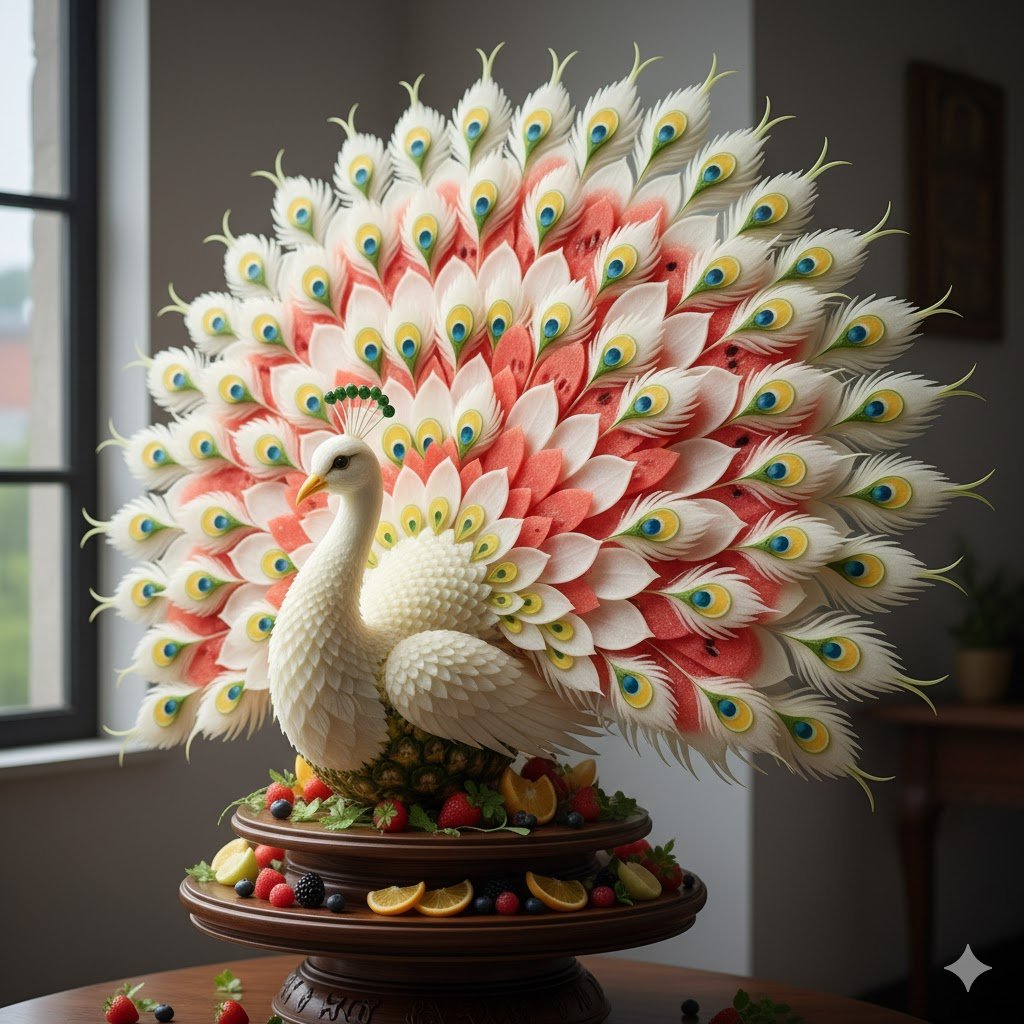
But unlike traditional sculptures, these masterpieces have a timer: they melt, they wilt, they are eaten. And perhaps that is what makes them even more special—art that lives only for a moment, then disappears forever.
Techniques and Materials
Edible sculptures come in many forms:
- Fruit and Vegetable Carvings: Watermelon roses, cucumber spirals, radish flowers, even entire dragons carved from pumpkins.
- Chocolate and Sugar Sculptures: Fragile towers of blown sugar, chocolate figurines polished to a mirror finish, colorful candy ribbons twisted into impossible shapes.
- Bread and Pastry Art: Loaves shaped like animals, intricate braids, and edible showpieces that combine baking with sculpture.
- Ice and Butter Sculptures: Often seen at weddings or grand events, large-scale works that amaze before they slowly dissolve.
Each material requires different tools and skills—specialized carving knives (like this fruit carving set on Amazon), molds for chocolate (see professional chocolate kits), or even 3D printers that can “print” chocolate (check this chocolate 3D printer).

Food as Storytelling
Beyond skill, edible art is also about telling a story. A fruit carving may celebrate harvest traditions. A chocolate sculpture may symbolize childhood memories of sweetness. A sugar tower might represent the fragility of beauty itself.
In this way, food art is not only a craft but a form of cultural dialogue—artists communicate values, history, and emotion through something as everyday as an apple or a piece of chocolate.
Technology Meets Tradition
Today, technology expands the possibilities of edible sculptures. 3D-printed molds allow chefs to design impossible shapes. Digital tools help them plan compositions before touching ingredients. At the same time, traditional hand-carving remains deeply respected—a reminder that even in a high-tech world, the human touch brings warmth and uniqueness.
This balance between tradition and innovation mirrors what art has always been: a dance between the past and the future.
Why Food Art Matters
Some may ask: why put so much effort into something that will disappear in a few hours? The answer is simple: because beauty itself is fleeting. Just like a flower that blooms and fades, or a sunset that lasts minutes, food sculptures remind us to cherish the moment.
They invite us to slow down, to appreciate detail, and to connect with others around the table. They transform an everyday act—eating—into a celebration of creativity.
🍓 A Tasty Dilemma
Food art doesn’t just impress—it teases. Have you ever seen a watermelon carved into a rose and thought, “Do I admire it… or eat it?” That’s the paradox of edible sculpture: it’s too beautiful to destroy, yet too delicious to resist. Chocolate castles whisper “take a bite,” while sugar ribbons sparkle like candy fireworks. Art you can eat is art that laughs at you—because sooner or later, temptation always wins.
Conclusion: A Feast for the Eyes and Soul
Food art and edible sculptures prove that art is everywhere—not only on museum walls but also on our plates. They remind us that creativity has no boundaries, and that even the most ordinary materials, when touched by imagination, can become extraordinary.
Next time you see a carved fruit, a decorated cake, or a chocolate showpiece, take a moment. Admire it not only as food but as art. Because in that instant, cuisine truly becomes a canvas.
If you’d love to keep exploring the world of edible creativity—from carved fruits to chocolate sculptures and artistic plating—continue your journey here:
Food Art & Edible Sculptures 11
If you’re curious about how visual design, symbolism, and style influence all forms of artistic expression, take the next step here:
Styles, Themes & Trends 8
Curious to explore everything Print on the Hand has to offer across all categories and creative paths? View the full collection here:
All Categories
