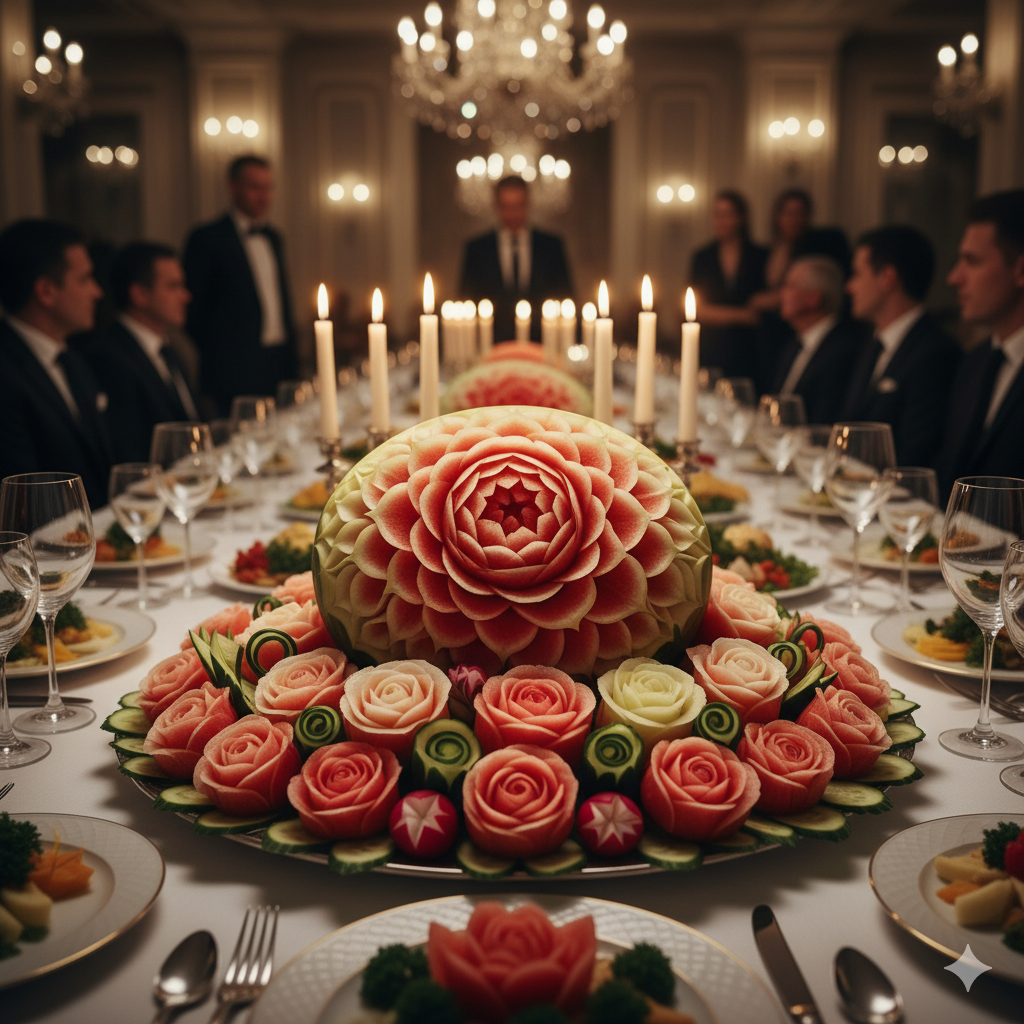
Fruit and vegetable carvings have fascinated guests at banquets, weddings, and festivals for centuries. What might seem like a simple melon or radish can, in the hands of a skilled artist, become a rose, a dragon, or even an entire garden. These edible sculptures are more than decoration—they are a cultural heritage, a display of patience and precision, and a reminder that beauty can bloom even in the most ordinary ingredients.
Roots of the Craft
The art of carving fruits and vegetables can be traced back to Thailand, where it was traditionally practiced for royal ceremonies. Known as kae sa luk, it transformed common fruits into dazzling centerpieces symbolizing prosperity and refinement.
In Japan, the practice of mukimono also flourished, with chefs delicately slicing vegetables into flowers or birds to enhance meals. Both traditions share the belief that food presentation reflects respect for the guest and for nature itself.
Modern Masters and Competitions
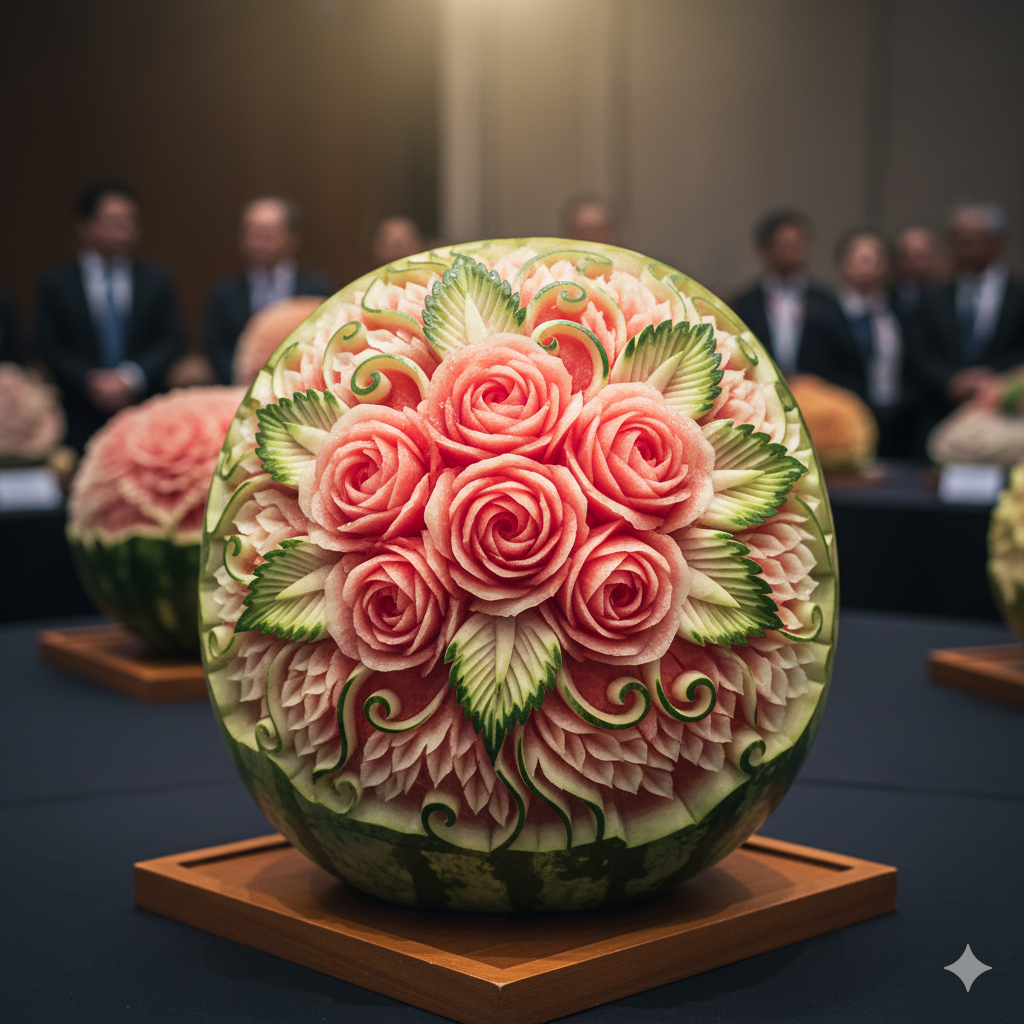
Today, fruit and vegetable carvings are not limited to palaces or rituals—they are showcased at culinary competitions, food festivals, and luxury weddings around the world. From watermelon roses to pumpkin dragons, these displays amaze audiences and prove that the craft is alive and evolving.
Professional chefs even offer carving workshops for enthusiasts, turning this once-royal practice into a global creative hobby.

Tools of the Trade
To create a masterpiece, carvers use special knives with razor-sharp tips and ergonomic handles. Beginners often start with a fruit carving knife set like this Amazon fruit carving kit, which includes chisels, scoops, and blades designed for precision.
Advanced artists may add turntables to rotate large melons, or molds to guide consistent floral shapes. For those who want to learn from scratch, there are even books on fruit carving , that combine history, techniques, and practice projects.
And for anyone serious about the craft, structured online courses (such as carving classes on Udemy) provide expert instruction with lifetime access—perfect for transforming a hobby into a skill.
Cultural Significance
Carving fruits and vegetables is not just about beauty—it is about meaning.
- A carved lotus often symbolizes purity and renewal.
- A melon shaped like a phoenix represents rebirth and prosperity.
- Radish flowers may be carved for New Year’s feasts to invite luck.
Each piece carries a story, making the craft a form of visual storytelling with food.
🍋 The Hungry Joke
Fruit carvings don’t just impress—they tempt. Picture a juicy watermelon carved into a bouquet. Guests lean closer, admiring the artistry… until someone whispers: “Should we eat it?” That’s the eternal conflict: admire the sculpture or devour it. And usually, both happen—the roses vanish one slice at a time!
Technology and New Horizons
Even this ancient craft adapts to modern times. 3D printing and digital design now help chefs experiment with complex patterns, while social media platforms like Pinterest spread the inspiration globally. A photo of a single carved melon can inspire thousands to try their hand at edible artistry.
Conclusion: Living Symbols on the Table
Fruit and vegetable carvings are proof that the simplest materials—cucumbers, radishes, melons—can be elevated to timeless works of art. They are living symbols, fragile and fleeting, yet deeply meaningful.
So next time you see a carved rose blooming from a watermelon, pause and admire it. It may be eaten within the hour, but its memory—like all art—lasts forever.

If you’d love to keep exploring the world of edible creativity—from carved fruits to chocolate sculptures and artistic plating—continue your journey here:
Food Art & Edible Sculptures 11
If you’re curious about how visual design, symbolism, and style influence all forms of artistic expression, take the next step here:
Styles, Themes & Trends 8
Curious to explore everything Print on the Hand has to offer across all categories and creative paths? View the full collection here:
All Categories
